
EN / PT
Summers in Portugal are getting hotter, and heatwaves more frequent. For parents, this brings an added worry: children, especially babies, are particularly vulnerable to heat and sun, and can't always tell us when something is wrong. The good news is that, with a few simple precautions, summer can be enjoyed safely. We've gathered everything you need to know in this guide.
Note: this article is for information only and does not replace professional medical advice. If you notice serious symptoms, call 112 (or the Portuguese health line SNS 24, 808 24 24 24) immediately.
Why are children more sensitive to heat?
A child's body heats up faster than an adult's and sweats less efficiently, which makes regulating temperature harder. Babies, in particular, depend entirely on us to stay cool and hydrated, and cannot communicate discomfort. That's why, on very hot days, the watchfulness of an adult is the first and most important protection.
How can you protect children during a heatwave?
On the hottest days, the goal is to keep your child cool, hydrated and away from the peak heat. Some essential precautions:
Stay indoors during the hottest hours, generally between 11am and 5pm.
Keep the home cool, with blinds or curtains closed during the day and airing it in the early morning and late evening.
Dress them in light, loose, pale clothing, in natural fabrics such as cotton.
Offer light, cool meals, such as fruit and chilled soups.
Cool your child down with lukewarm baths or damp cloths.
Never leave a child alone in a car, not even for a few minutes: the temperature rises to dangerous levels very quickly.
How do you keep children hydrated in the heat?
Hydration is essential. Offer water frequently throughout the day, even if your child doesn't ask for it. Avoid sugary or very cold drinks. For babies under 6 months, water should not be given: the recommendation is to offer more frequent feeds (breast milk or formula).
Watch for signs of dehydration: fewer wet nappies than usual, dry lips and mouth, crying without tears, drowsiness or irritability. If you notice these signs, offer fluids and seek medical advice.
How do you protect children from the sun?
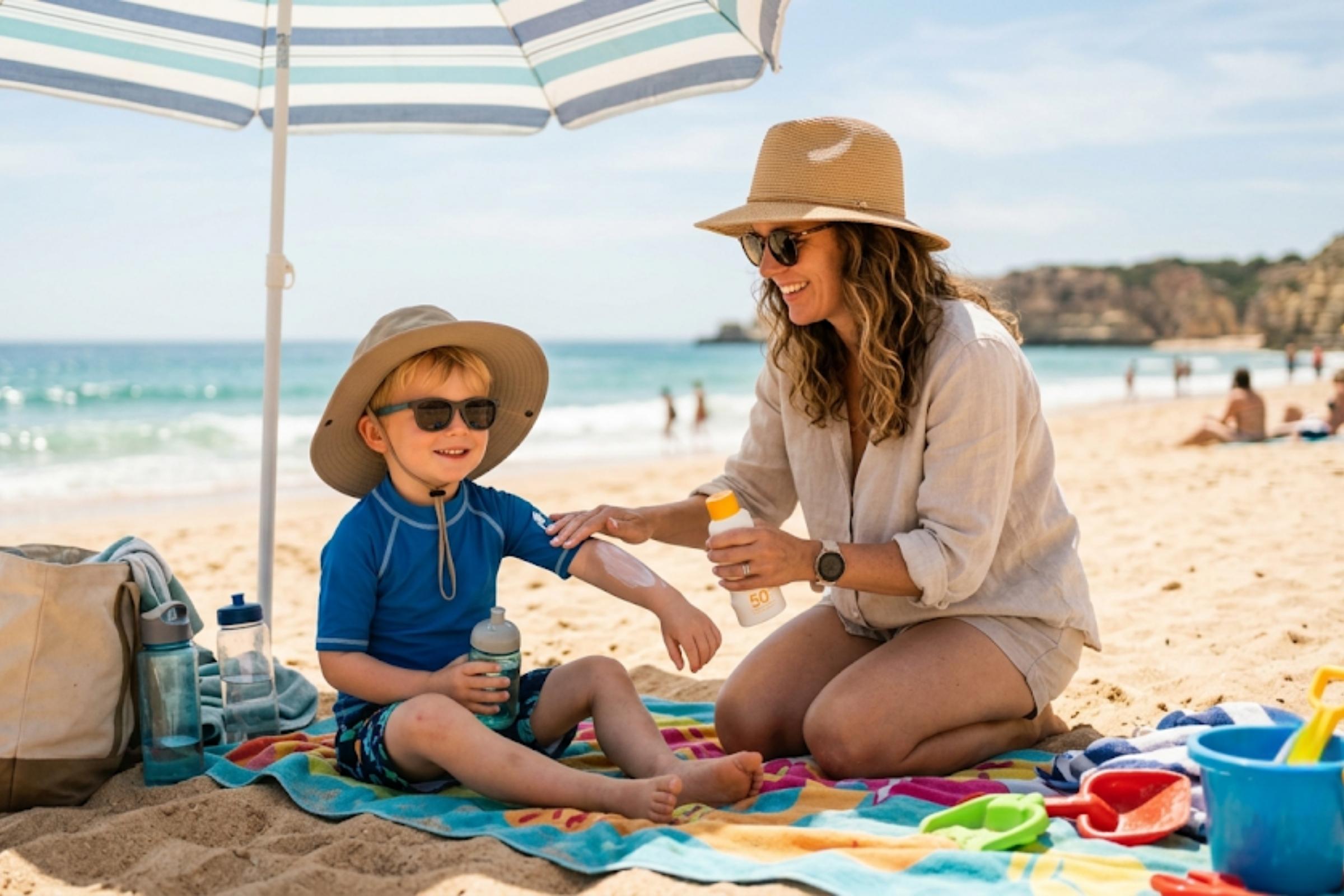
Sunscreen matters, but it's only part of the protection. The golden rule is to avoid direct exposure during the most intense hours (11am to 5pm) and to favour shade. Alongside this:
A wide-brimmed hat that protects the face, ears and neck.
UV-protection sunglasses made for children.
Sun-protective clothing (long-sleeved, specialised fabric) for the beach or pool.
Shade whenever possible, with a sun hat, tent or parasol.
What sunscreen should you use on children and babies?
Use a broad-spectrum sunscreen (UVA and UVB protection) with an SPF of 30 to 50+, made for children's sensitive skin. Apply about 30 minutes before going out and reapply every 2 hours, and always after your child gets wet or sweats heavily.
For babies under 6 months, the recommendation is to keep them out of direct sunlight, in the shade and in suitable clothing, rather than relying on sunscreen; it should be applied only to small exposed areas, and only when there is no alternative. From 6 months, an age-appropriate sunscreen can be used, without giving up shade and clothing.
How do you recognise heatstroke in a child?
It's important to tell two conditions apart. With heat exhaustion, a child may show heavy sweating, pale and cool skin, tiredness, headache, dizziness, nausea and irritability. In this case, take them to a cool place, give them fluids and cool the skin.
Heatstroke is more serious and is an emergency: body temperature rises sharply, the skin may become hot and dry (or very sweaty), and confusion, extreme drowsiness, vomiting or seizures may appear. If you notice these signs, call 112 immediately, move the child into the shade, remove clothing and cool them while you wait for help.
What should you do when a heat warning is issued?
Portugal's weather service (IPMA) issues warnings (yellow, orange or red) according to severity, and the health authority (DGS) publishes recommendations during periods of intense heat. On those days, step up all the precautions above, avoid going out and outdoor activities during the hottest hours, and pay extra attention to babies, young children and anyone with chronic illnesses. If in doubt about symptoms, the SNS 24 line (808 24 24 24) can help you decide how to act.
On the days you need support to keep children's routines, hydration and shade, especially when work can't pause, having someone you trust makes a difference. That's also what our Baby Sisters Summer Packs are for, with personalised care at home.
Frequently asked questions
From what age can I put sunscreen on a baby? Generally from 6 months, with an age-appropriate sunscreen. Before that, the recommendation is to keep the baby out of direct sunlight, in the shade and in suitable clothing, using sunscreen only on small exposed areas and when there is no alternative.
How often should I reapply sunscreen on children? Every 2 hours, and always after a child gets wet, swims or sweats heavily.
What are the signs of dehydration in a child? Fewer wet nappies than usual, dry lips and mouth, crying without tears, drowsiness or irritability. If you notice these signs, offer fluids and seek medical advice.
What should you do if a child has heatstroke? Call 112 immediately, move the child to a cool, shaded place, remove clothing and cool the skin while you wait for help. Heatstroke is a medical emergency.