
EN / PT

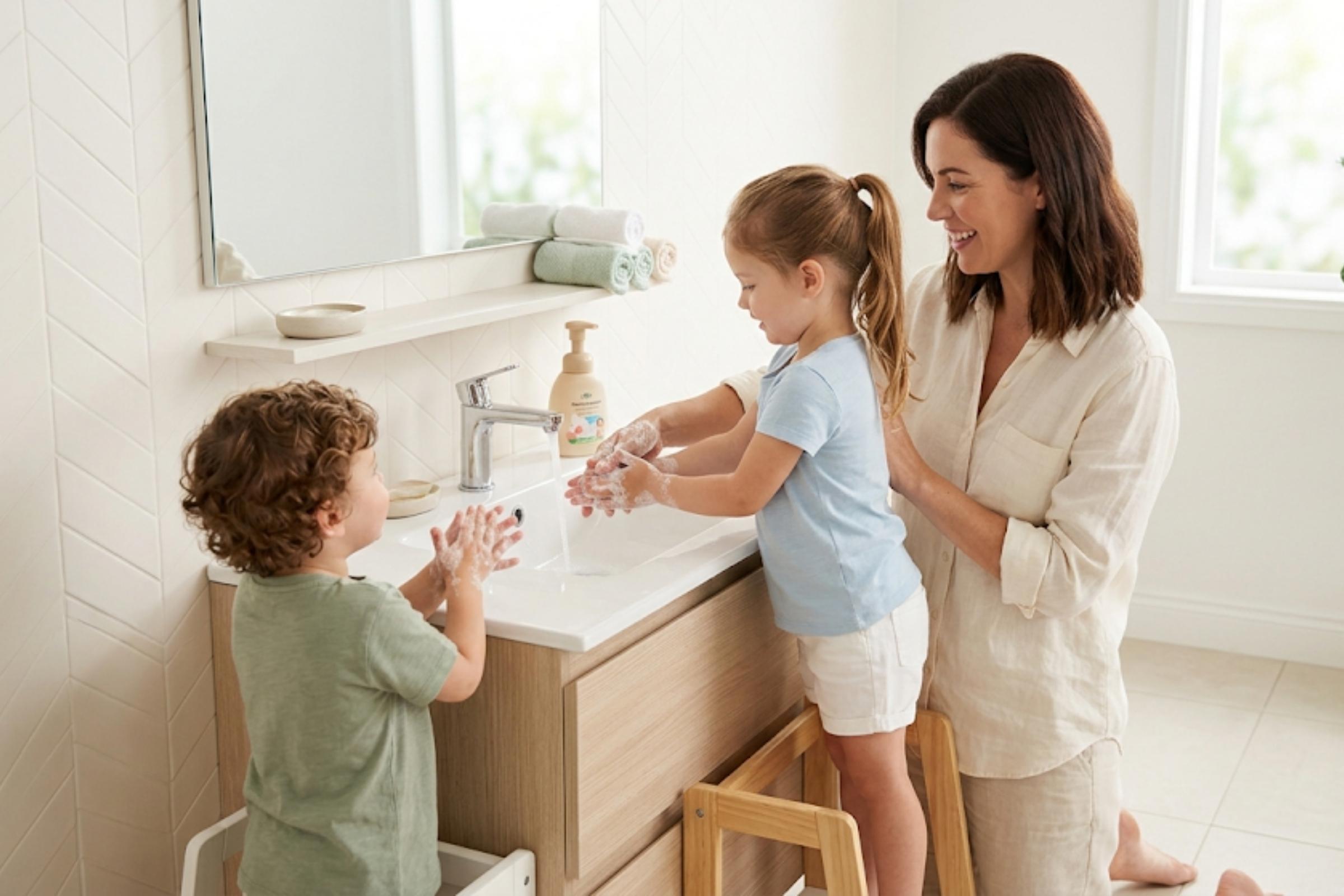
Building hygiene habits is one of the most important investments in a child's health and when they become routine early on, they stop being a battle and turn into something natural. This guide brings together the essentials of children's hygiene by age and links to the articles where we go into each topic in depth.
Note: this article is for information only and does not replace the advice of your paediatrician, dentist or oral hygienist, particularly regarding fluoride toothpaste.
How do you adapt hygiene to a child's age?
Hygiene grows with development. In babies, it's entirely managed by carers. In the pre-school years, the child starts to take part of scrubbing their hands, trying to brush their teeth, always with help. At school age, they gain autonomy for most tasks, but still need supervision and reminders until the habits are firmly in place.
Oral hygiene: brushing teeth
Oral hygiene begins before the first tooth, and brushing should happen twice a day, with special attention to the night-time brushing. The use and amount of fluoride toothpaste vary by age and should follow your dentist's or paediatrician's guidance. We cover everything, from the first brush to the first dentist, in the dedicated guide: children's oral hygiene.
The bath: frequency, temperature and safety
A daily bath isn't necessary to keep a child clean and healthy. What matters is to wash the areas that need it, use warm water (never hot) and gentle products, and never leave a baby or child alone in the bath. See the full guide: bathing your baby and child.
Handwashing: the habit with the greatest impact
Handwashing is the hygiene habit with the greatest impact on preventing illness. Teach your child to wash their hands before meals, after using the toilet and when getting home, with soap and water, scrubbing well for about 20 seconds (the time it takes to sing a short song). The adults' example is the best teacher.
How do you make hygiene a habit (without battles)?
Consistency matters more than perfection. Tie hygiene to fixed moments of the day (the bath, bedtime), set the example, make it playful and value every step. Consistency across all carers, parents, grandparents, nursery and babysitter, is key for routines to stick. When you have the support, the same habits are maintained, helping your child internalise them faster.
Frequently asked questions
From what age should children have hygiene habits? From babyhood, adapted to their age: first managed by carers, then with the child's growing participation, always with supervision until the habits are firmly in place.
How many times a day should children brush their teeth? Twice a day, in the morning and before bed, with the night-time brushing being the most important. Learn more in the oral hygiene guide.
Do children need a bath every day? Not necessarily. The key is to wash the areas that need it and use gentle products. Learn more in the bath guide.
How do you teach a child to wash their hands well? Before meals, after the toilet and when getting home, with soap and water, scrubbing for about 20 seconds and setting the example.