
EN / PT
On very hot days, children are among the most vulnerable and heatstroke is one of the most dangerous situations that can arise. Knowing how to recognise the first signs and act quickly can make all the difference. This guide helps you tell a warning situation from a true emergency, and know exactly what to do in each case.
Important: heatstroke is a medical emergency. If you see the signs described below, call 112 immediately. If you're unsure about symptoms, you can contact the Portuguese health line SNS 24 (808 24 24 24). This article is for information only and does not replace medical advice.
What is heatstroke?
Heatstroke happens when the body can no longer regulate its temperature and it rises to dangerous levels. It usually follows an earlier, milder stage called heat exhaustion, which acts as a warning. Recognising and acting at that early stage is the best way to stop it from progressing to something serious.
Children, and especially babies, heat up faster and regulate their temperature less easily than adults, so they're at greater risk in hot environments, with dehydration, too much clothing or physical exertion in the sun.
What are the signs of heat exhaustion in a child?
This is the warning stage. The child is usually conscious and responsive, but may show:
Heavy sweating and pale, cool or clammy skin
Tiredness, weakness or floppiness
Headache and dizziness
Nausea or vomiting
Irritability or crying easily
Intense thirst
Muscle cramps
At this stage, quick action usually resolves the situation. If the signs don't improve within about 30 minutes, or if they get worse, treat it as an emergency.
What are the signs of heatstroke?
Heatstroke is more serious and requires immediate action. The warning signs include:
Very high body temperature
Hot, red skin: it may be dry or, in children, still sweaty
Rapid breathing and heartbeat
Confusion, disorientation or slurred speech
Extreme drowsiness or difficulty waking
Vomiting
Loss of consciousness or seizures
In babies, watch for signs such as skin that's very hot to the touch, unusual floppiness or drowsiness, refusing to feed, fewer wet nappies and high-pitched, inconsolable crying.
What should you do if a child has heat exhaustion?
Act at the first signs:
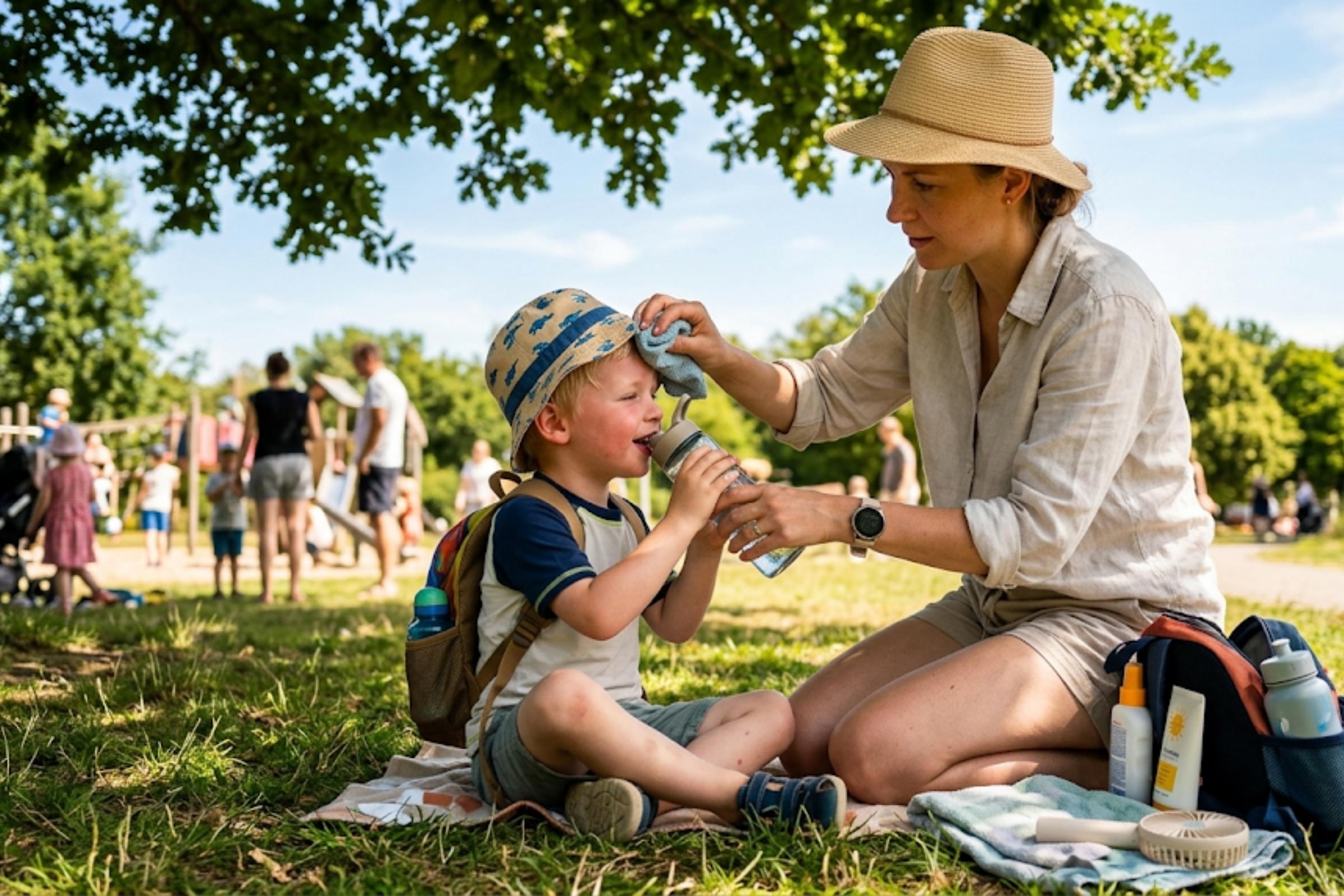
Move the child to a cool, shaded place, ideally airy or with a fan.
Remove excess clothing.
Cool the skin with cool, damp cloths or a lukewarm bath.
Give small sips of cool water, if they're conscious and able to drink.
Let them rest and keep them under watch.
The situation should improve within about 30 minutes. If it doesn't, or if any sign of heatstroke appears, call 112.
What should you do in the event of heatstroke?
Here every minute counts. Call 112 immediately and, while you wait for help:
Move the child to a cool place and remove their clothing.
Cool them actively: wet the skin with cool water and fan them, and apply cold packs to the nape, armpits and groin.
If conscious, give small sips of water.
If unconscious, lay them on their side (recovery position) and monitor their breathing.
Don't try to lower the temperature with medication: cooling should be physical. Always follow the instructions from 112.
How do you prevent heatstroke in children?
Prevention is simple and effective: keep the child hydrated, in the shade, in light clothing, avoid exposure and exertion during the hottest hours (11am to 5pm), and never leave them in a car, not even for a moment. You'll find all these precautions, in detail, in our guide Protecting children from heat and sun.
On the days you need support to keep up this watchfulness, especially when work can't pause, having someone you trust with the children makes a difference. That's also what our Baby Sisters Summer Packs are for.
Frequently asked questions
What's the difference between heat exhaustion and heatstroke? Heat exhaustion is a milder, warning stage in which the child is usually conscious (sweating, paleness, tiredness, headache). Heatstroke is the severe form, with a very high temperature and signs such as confusion, extreme drowsiness or loss of consciousness, and it's a medical emergency.
What should you do if a child has heatstroke? Call 112 immediately. While you wait, move the child to a cool place, remove their clothing, cool them with cool water and cold packs, and, if unconscious, lay them on their side and monitor their breathing.
What are the signs of heatstroke in a baby? Skin that's very hot to the touch, unusual floppiness or drowsiness, refusing to feed, fewer wet nappies and high-pitched, inconsolable crying. If you see these signs, call 112.
How quickly should heat exhaustion improve? With the right care, it usually improves within about 30 minutes. If it doesn't improve or gets worse, treat it as an emergency and call 112.